Pioneering Collegiate Autonomy at the University of Wisconsin–Madison
Wisconsin Autonomous is a premier collegiate engineering organization dedicated to developing autonomous vehicles systems. Operating out of the UW–Madison College of Engineering, the student-led team brings together over 150 undergraduate and graduate engineers spanning computer science, electrical and computer engineering, and mechanical engineering to bridge academic theory with real-world autonomous mobility.
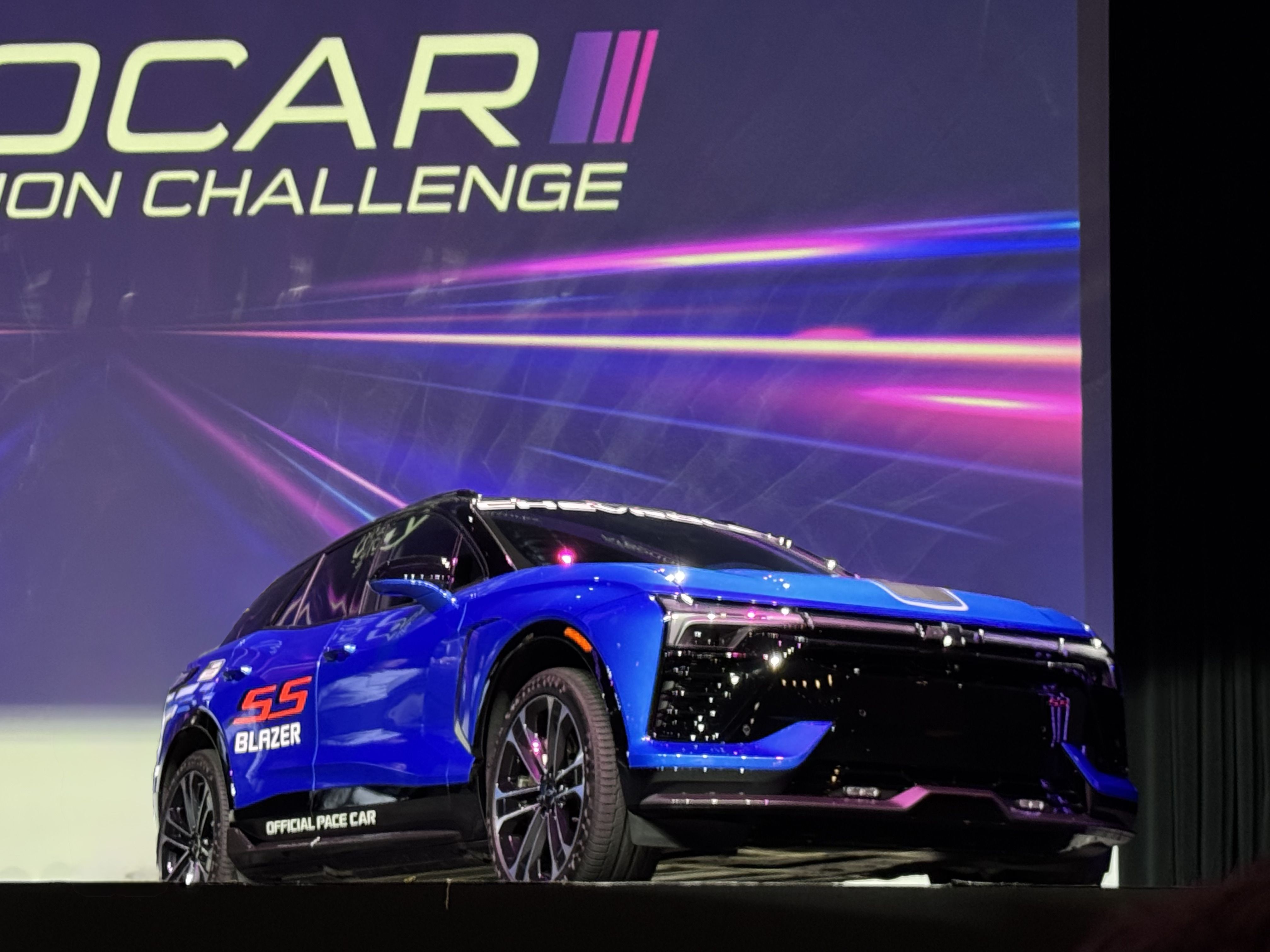
Our team has built a track record within the premier Advanced Vehicle Technology Competitions (AVTCs) organized by the U.S. Department of Energy and Argonne National Laboratory. Over a rigorous five-year cycle in the SAE International and General Motors AutoDrive Challenge II (2021–2026), Wisconsin Autonomous engineered an SAE Level 4 autonomous Chevrolet Bolt EUV capable of navigating complex urban driving scenarios, pedestrian crosswalks, and dynamic obstacles. Building upon this legacy, the organization is currently competing in the multi-year EcoCAR EV Challenge (2026–2030), sponsored by the U.S. Department of Energy, General Motors, Stellantis, and MathWorks, re-engineering a next-generation production electric vehicle for energy efficiency, vehicle-to-everything (V2X) connectivity, and advanced automated driving features.
Wisconsin Autonomous has earned national recognition through its major competitive accomplishments. The team secured 3rd place overall in the cumulative five-year AutoDrive Challenge II competition, highlighted by consecutive 2nd place overall podium finishes in both 2025 and 2026, alongside multiple 1st place victories in specialized dynamic driving challenges, mapping evaluations, and systems engineering presentations. In addition to AVTC programs, the team captured 3rd place overall at Purdue University’s evGrandPrix autonomous racing competition with a custom driverless electric kart and competed as an international simulation finalist in the Indy Autonomous Challenge.
The organization’s technical and academic focus encompasses the entire autonomous vehicle technology stack. Its perception division develops deep neural networks for semantic segmentation, real-time object detection, and multi-modal sensor fusion combining 3D LiDAR, stereoscopic cameras, and radar. Its controls and planning group designs optimal trajectory generation algorithms, model predictive control (MPC) frameworks, and behavior-tree decision systems. Concurrently, the hardware and infrastructure teams architect custom high- and low-voltage electrical distribution, compute racks hosting NVIDIA Orin platforms, drive-by-wire integration, and ISO 26262 safety-critical interlocks, while the simulation group maintains extensive hardware-in-the-loop (HIL) testbeds and CARLA digital twin environments.
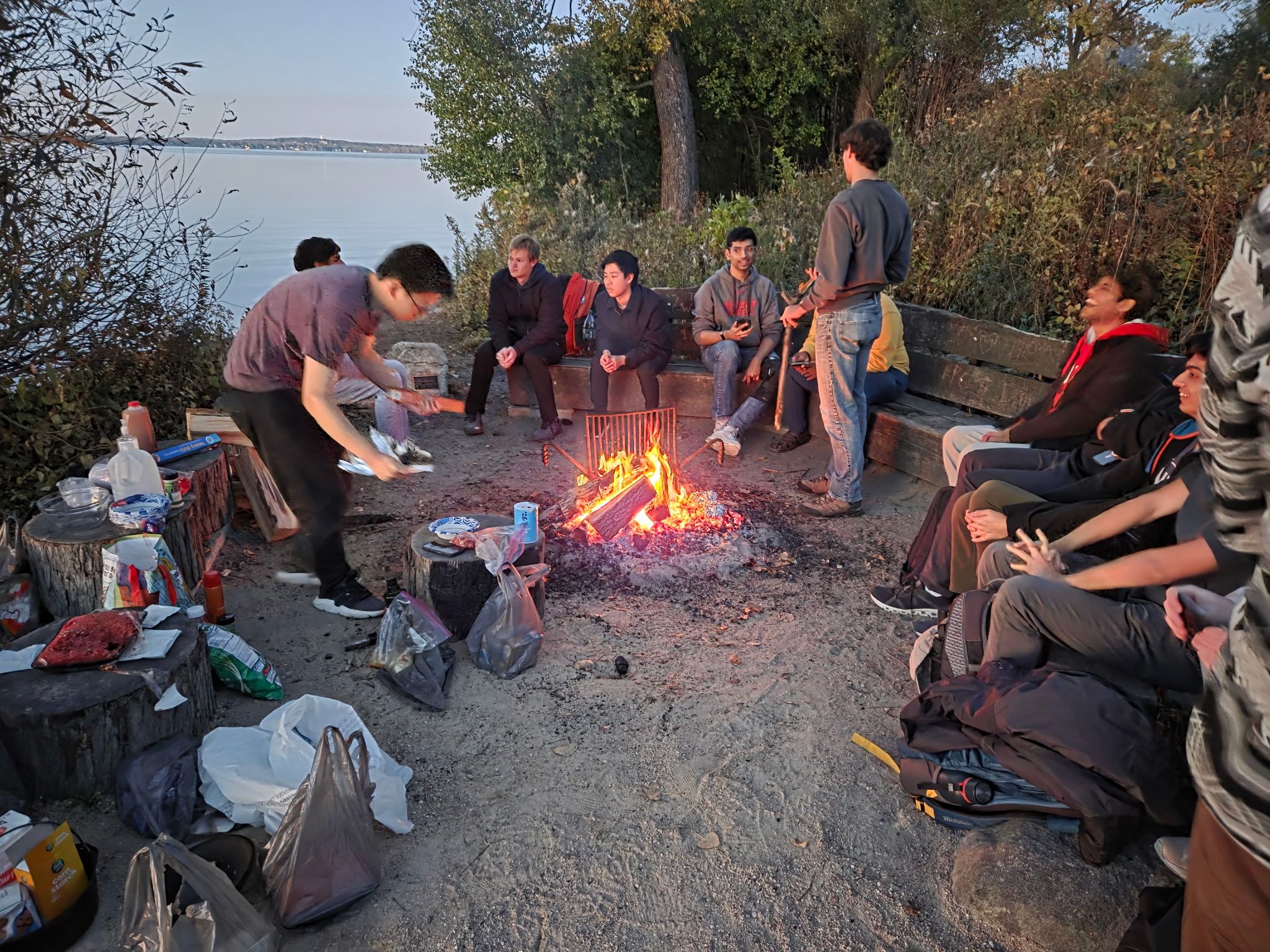
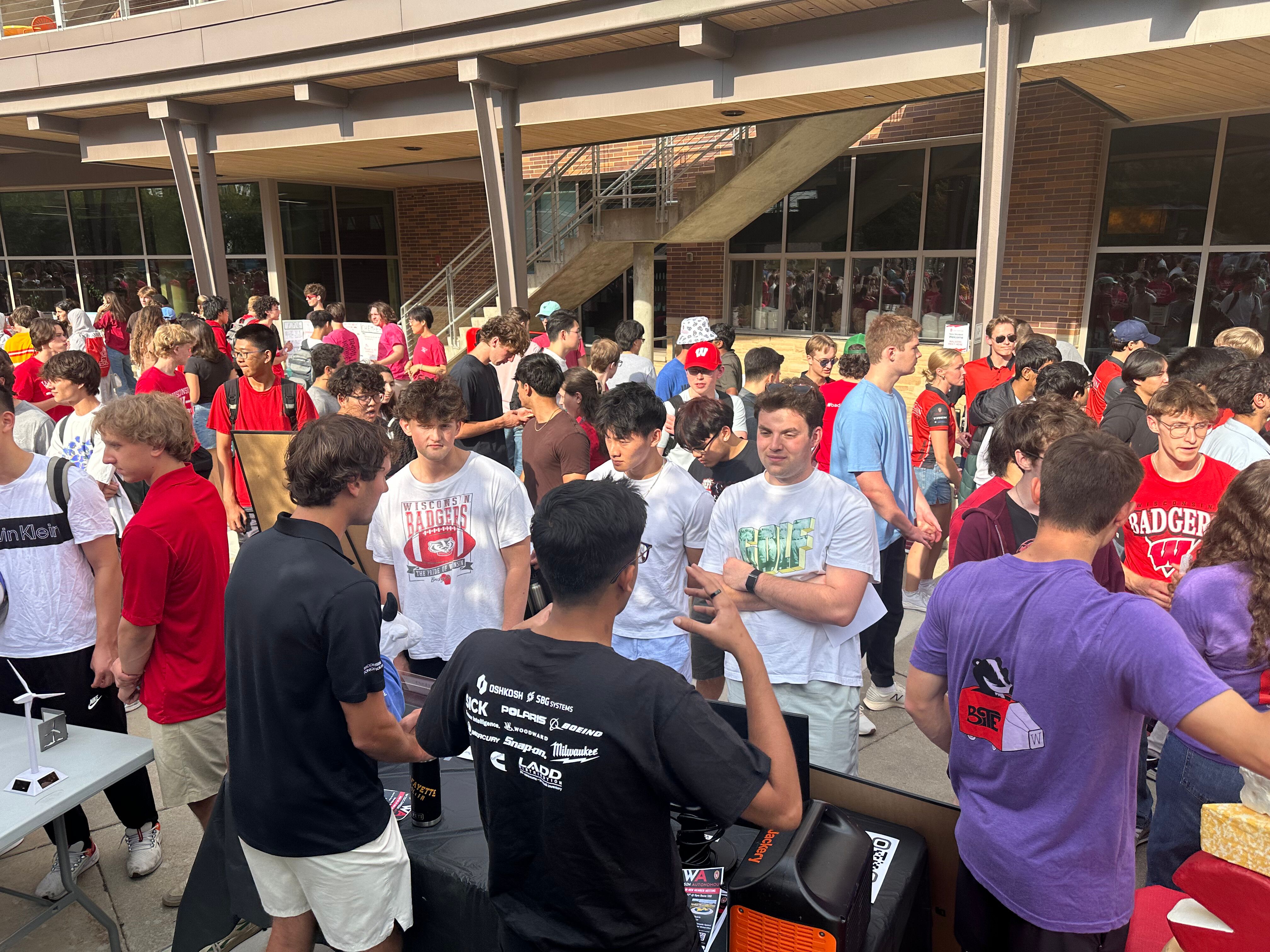
What sets Wisconsin Autonomous apart is its student-driven culture. Members with no experience can work on real projects and get some foothold in the automotive industry. Members can learn good software engineer practices, new tools, and learn from each other as well. We are fortunate to be backed by a lot of sponsors, please check them out in the sponsors page!
Sub-Teams
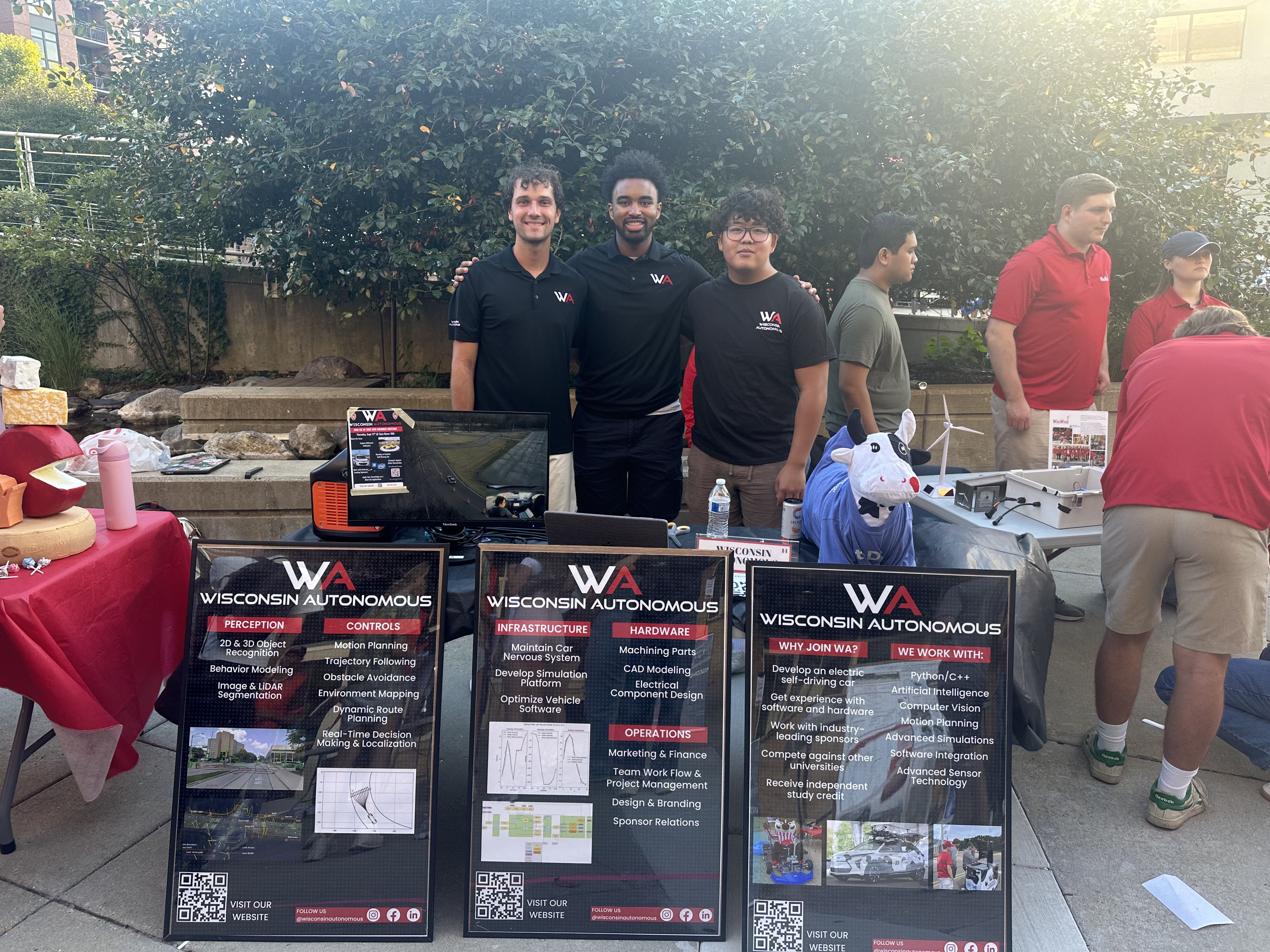
Our team operates across six specialized divisions to engineer autonomous systems end-to-end.
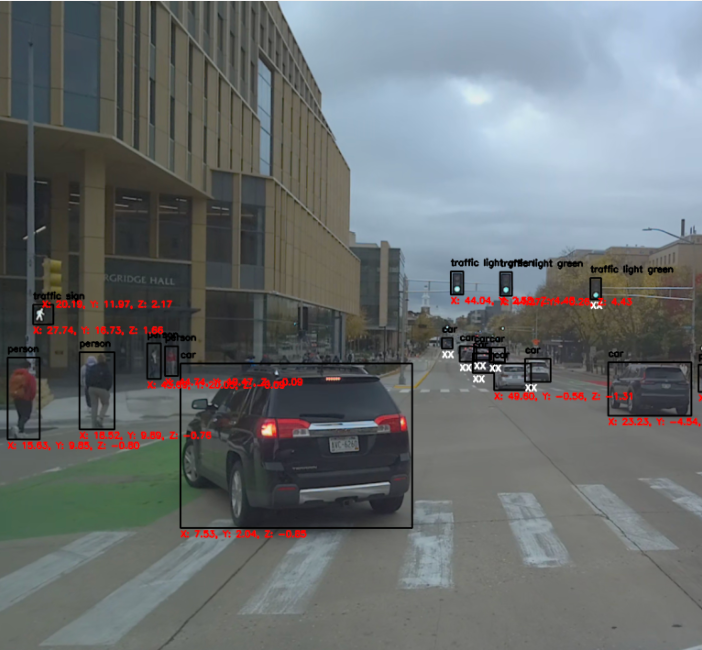
Perception
Machine Learning & Computer Vision
Deep learning, object detection/classification, semantic segmentation, lane line detection, sensor calibration, and sensor fusion.
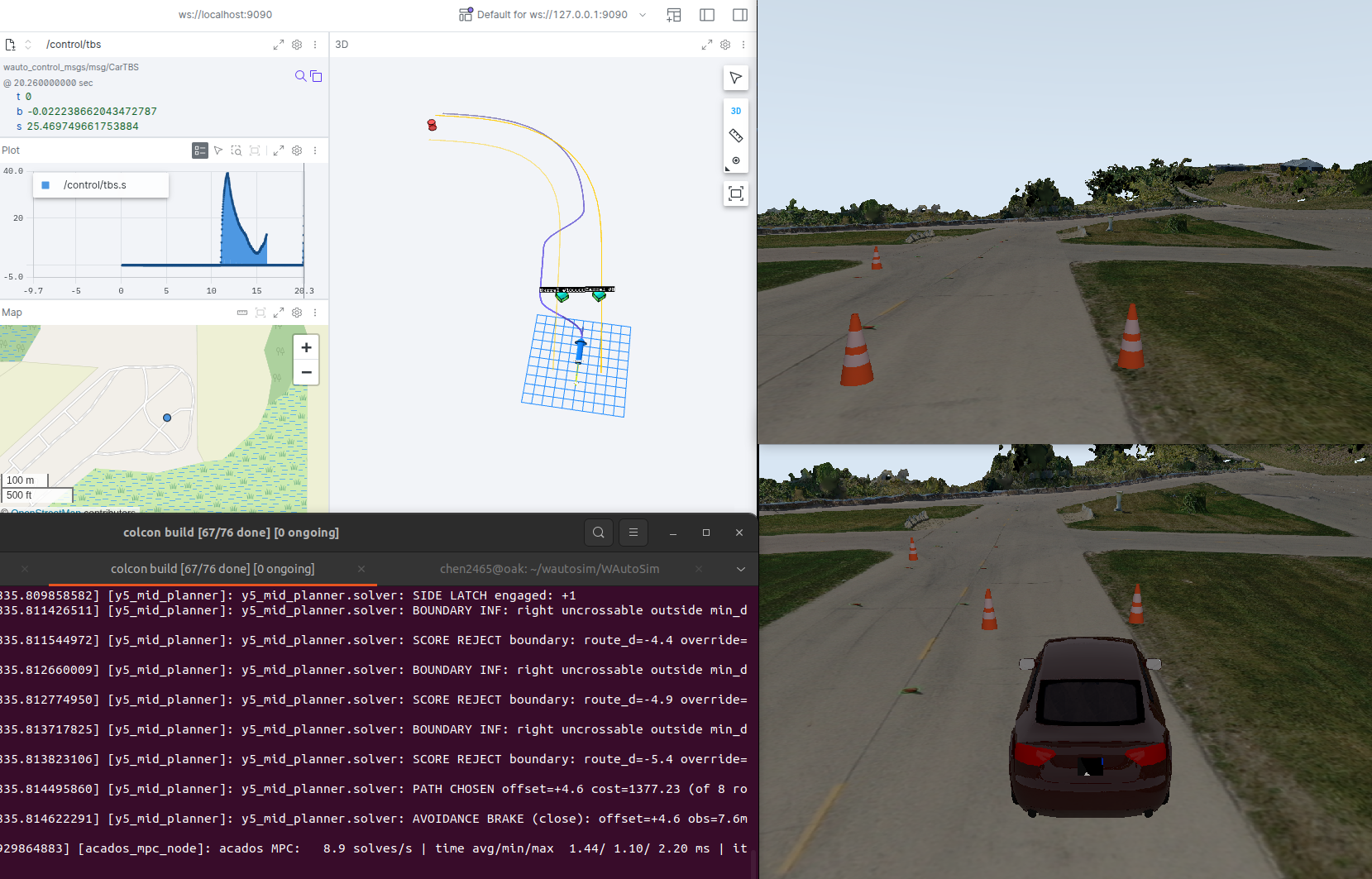
Controls
Behavior & Motion Execution
Trajectory generation, behavior decisions, dynamic rerouting, longitudinal and lateral control algorithm execution on high-performance compute platforms.
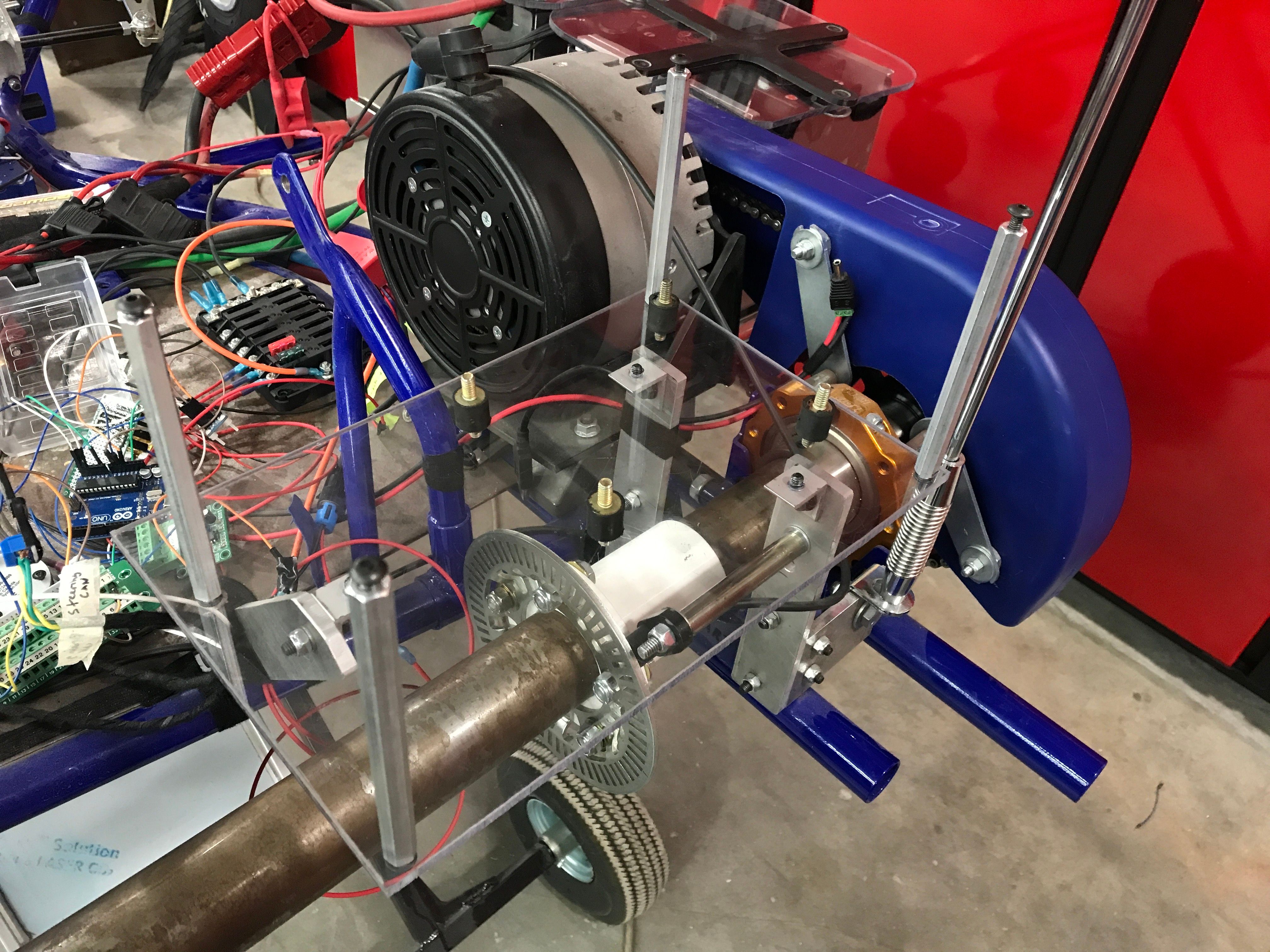
Hardware
EV Propulsion & AV Electronics
EV propulsion design and development, custom chassis design, AV sensor and compute mounting, testing infrastructure
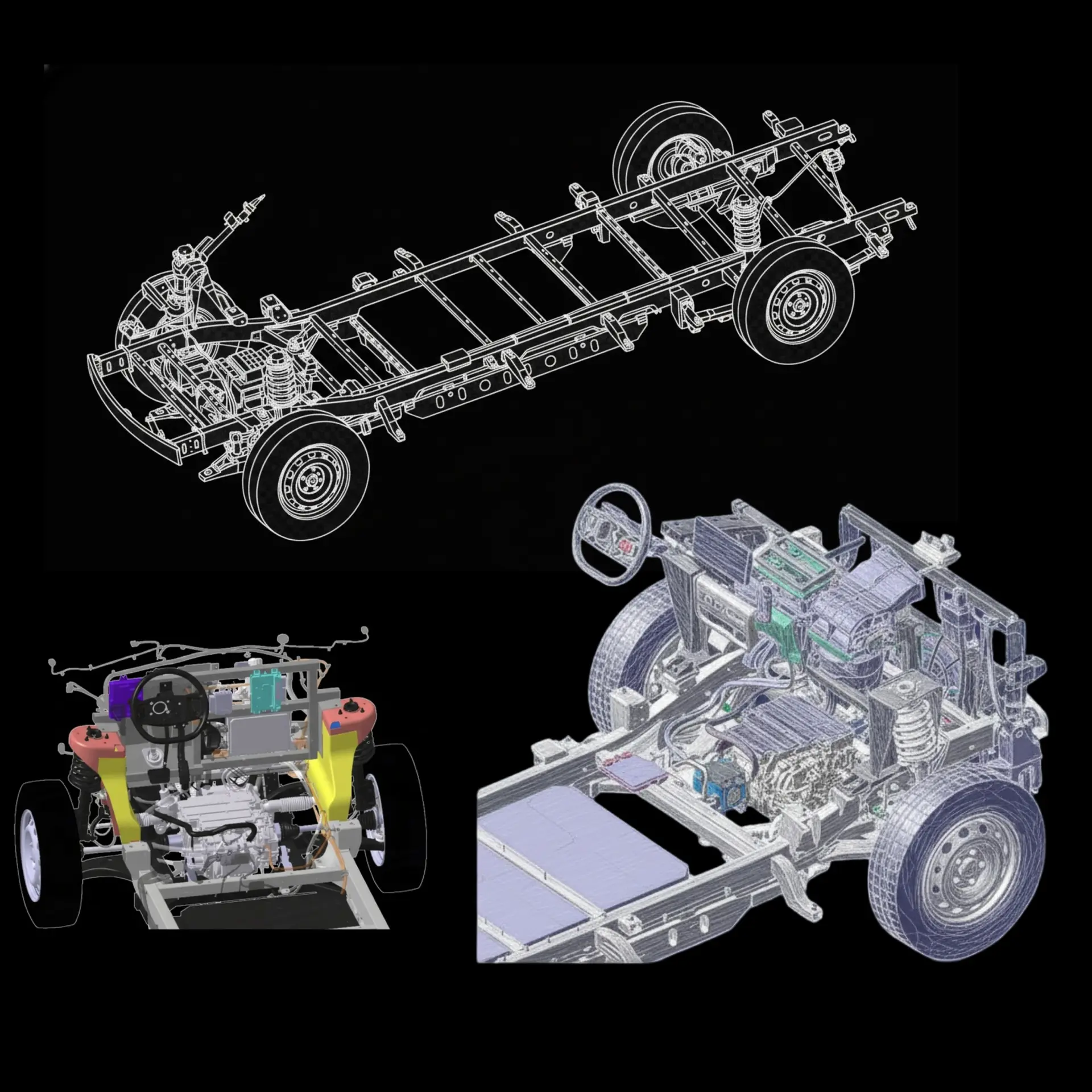
Infrastructure
Compute & Power Harnessing
Compute platforms, custom wiring harnesses, high and low voltage power delivery, drive-by-wire actuator integration, and hardware safety interlocks.
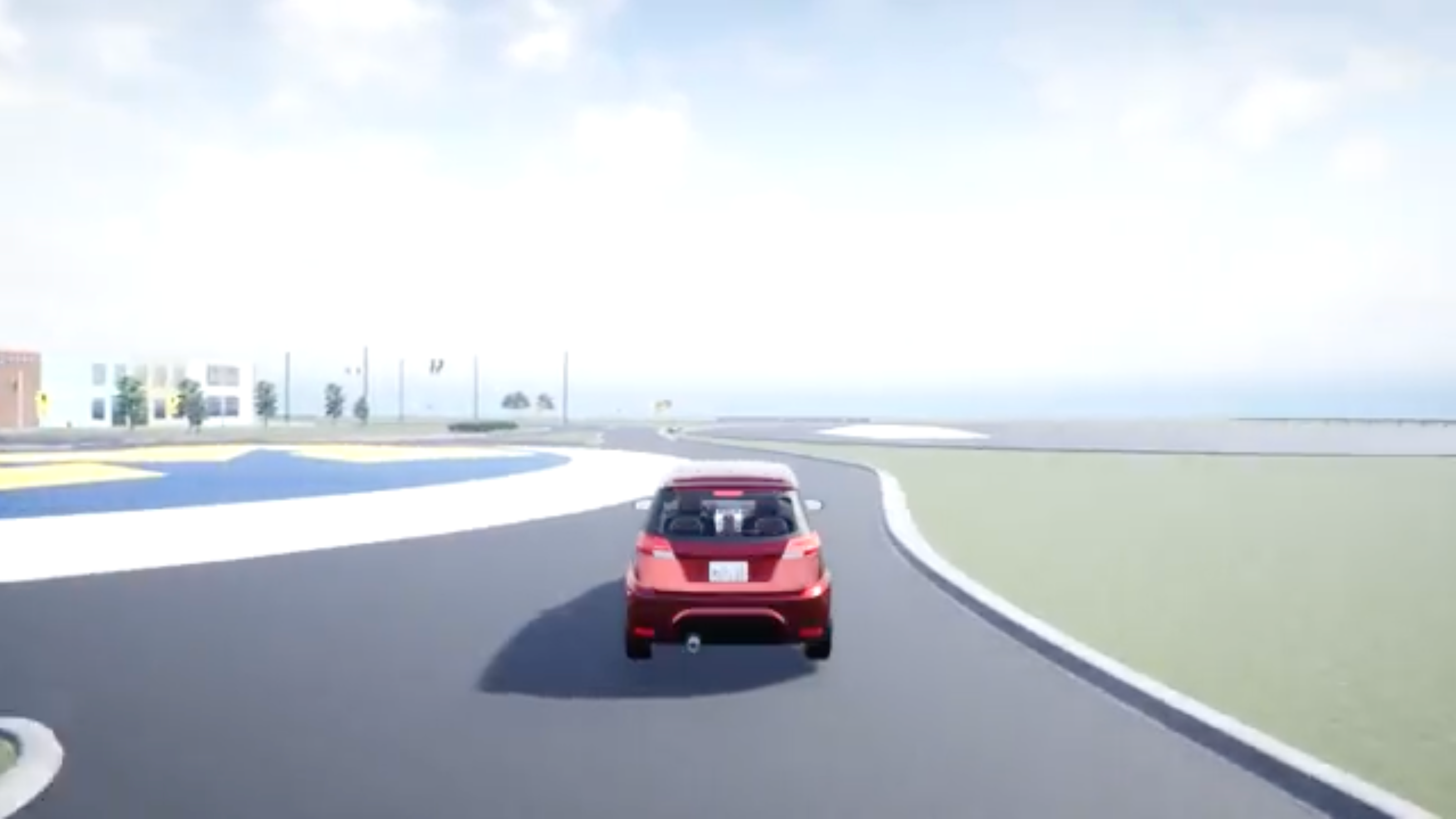
Simulation
Virtual Testing & HIL Rigs
Synthetic scenario libraries, hardware-in-the-loop (HIL) testing rigs, dynamic digital twin environments, and regression testing before touching asphalt.
Operations
Communication & Organization
Internal communication, sponsorship and volunteer outreach, project management, market research, and event planning